


- 12 Jun, 2025
- 0 Comments
- 2 Mins Read

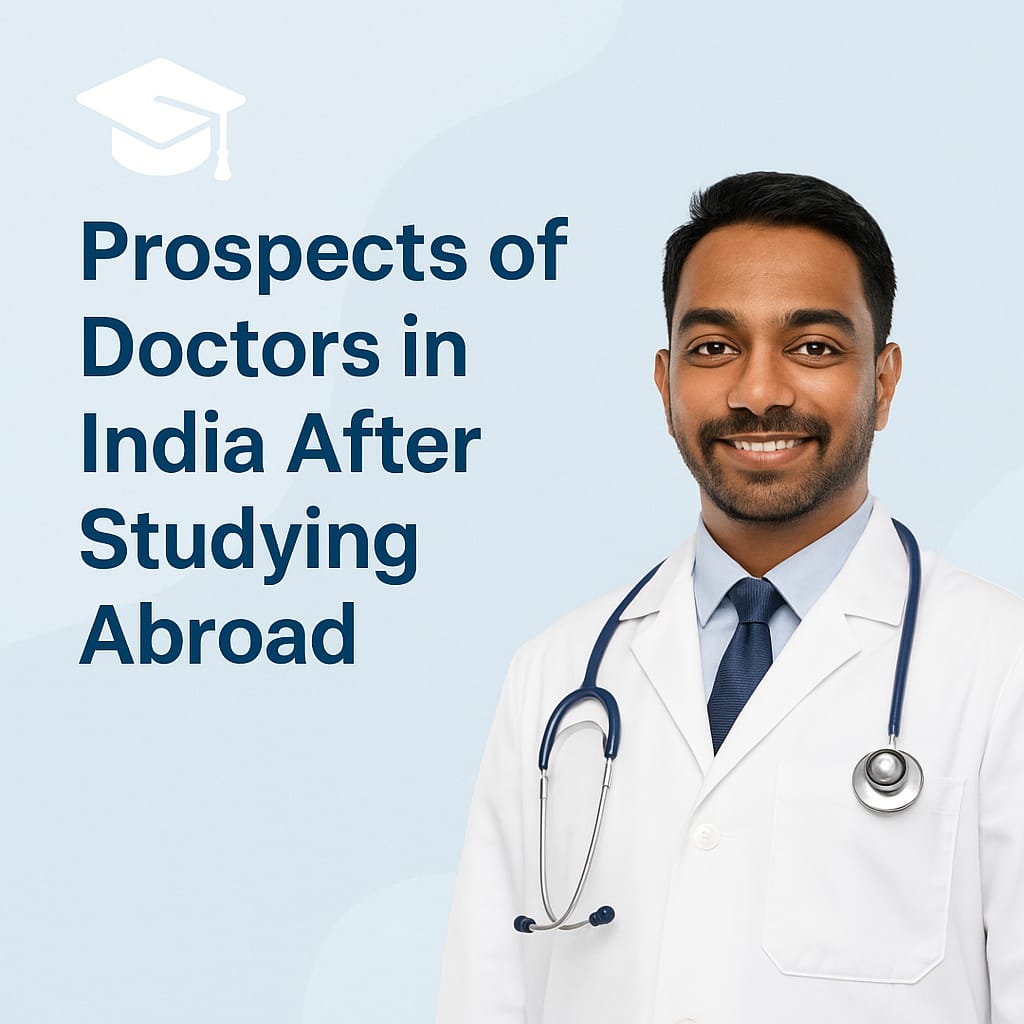
Prospects of Doctors in India After Studying Abroad
In recent years, an increasing number of Indian students have chosen to pursue medical education overseas. Countries like Russia, Ukraine, the Philippines, Georgia, and China have emerged as popular choices—offering affordable tuition, streamlined admission processes, and globally recognized programs.
1. Clearing the Licensing Barrier: FMGE & NExT
The first and most critical step is obtaining a license to practice medicine in India. For this, foreign medical graduates must clear the Foreign Medical Graduate Examination (FMGE), conducted by the National Board of Examinations (NBE).
-
Tough Road Ahead: Historically, FMGE pass rates have ranged between 10% and 25%. However, those who prepare thoroughly and align their studies with the Indian curriculum stand a better chance of success.
-
Future Changes: India is set to implement the National Exit Test (NExT)—a unified exam for both Indian and foreign medical graduates. This change aims to level the playing field by assessing all aspiring doctors through a common standard.
2. Career Pathways After Clearing FMGE
Once a foreign graduate clears the FMGE and registers with a State Medical Council, numerous professional avenues become available:
A. Government Sector
-
Eligible to appear for NEET-PG for specialization.
-
Can apply for roles in primary health centers, government hospitals, or as contractual medical officers.
B. Private Hospitals & Clinics
-
Many private hospitals welcome doctors trained abroad, especially those with exposure to international healthcare technologies.
-
Graduates can also set up private clinics or join group practices.
C. Postgraduate Studies
-
Eligible for NEET-PG to pursue MD/MS in India.
-
Specializations in high-demand areas like radiology, dermatology, psychiatry, and surgery can lead to lucrative and fulfilling careers.
D. Research & Academics
-
Opportunities exist in clinical research, medical trials, and as teaching faculty in private institutions.
3. Strengths & Challenges of Foreign-Educated Doctors
Advantages
-
Exposure to diverse medical systems and modern equipment.
-
Training aligned with international standards and best practices.
-
Often bring a multilingual skill set and global outlook.
Challenges
-
Adapting to the Indian healthcare system, especially in rural areas.
-
Managing cultural and clinical differences in patient interaction.
-
Overcoming perceptions or biases about foreign degrees—though these are gradually fading.
4. Growing Demand for Doctors in India
India continues to struggle with a low doctor-to-patient ratio, particularly in rural and underserved regions. This presents a major opportunity for foreign-trained doctors to fill critical gaps—provided they clear the necessary licensing exams.
5. Long-Term Career Growth Opportunities
With time, experience, and further specialization, foreign-educated doctors can:
-
Rise to roles like senior consultant, medical director, or hospital administrator.
-
Establish successful private clinics or multispecialty centers.
-
Explore new-age fields like telemedicine, healthcare startups, or contribute to NGO healthcare initiatives.
Final Thoughts
Studying medicine abroad can be a life-changing and rewarding journey for Indian students. While challenges like FMGE and clinical adaptation exist, careful planning and determination can lead to a thriving medical career in India. As the healthcare system continues to evolve, foreign-returned doctors have a unique opportunity to contribute meaningfully—bringing global perspectives to local healthcare needs.